Warehouse Roof Installation Melbourne South
If you’re planning a warehouse roof installation Melbourne south, the quality of the roofing system and installation method will directly impact your building’s reliability, operating costs, and long-term maintenance requirements. Warehouses aren’t like standard commercial buildings — they usually have large-span roof structures, wide roof catchment areas, multiple penetrations for skylights and vents, and high exposure to wind and storm conditions across open industrial precincts.
At Commercial Roof Restoration Melbourne, we specialise in warehouse roof installation and industrial roofing systems designed for Melbourne’s southern suburbs. Whether you’re building a new warehouse, upgrading an older distribution centre, or replacing a roof that’s no longer reliable, our team delivers commercial-grade results without shortcuts.
To speak with a warehouse roofing specialist, visit our homepage:
https://commercialroofingvic.com.au
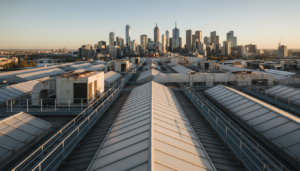
Why Warehouse Roof Installation Is a High-Stakes Commercial Project
Warehouse operations depend on a stable, watertight roof. A single leak can damage stock, interrupt workflow, cause safety hazards, and create expensive clean-up or insurance claims. Warehouses also commonly run large internal volumes, meaning temperature control and condensation management can become costly if the roof system isn’t designed correctly.
A proper warehouse roof installation Melbourne south project should achieve:
- Watertight performance through heavy rainfall and storms
- Strong wind uplift resistance across large roof spans
- Reliable drainage to prevent overflow and internal damage
- Low maintenance requirements with durable materials and detailing
- Condensation control to protect goods and internal infrastructure
Because warehouses cover large areas, small design mistakes can quickly become big problems. That’s why warehouse roofing needs specialist planning, correct installation practices, and strong attention to high-risk areas such as gutters, penetrations and sheet joins.
Warehouse and Logistics Precincts Across Melbourne South
Melbourne’s south is one of Victoria’s busiest freight and distribution regions. Warehouse roof installations are common across industrial corridors and logistics zones such as:
- Dandenong South and surrounding logistics estates
- Keysborough and Braeside industrial precincts
- Clayton South, Oakleigh South and Springvale corridors
- Moorabbin and Moorabbin Airport business zones
- Noble Park and commercial trade districts
- Carrum Downs warehouse and light industrial areas
- Seaford and Frankston industrial pockets
These areas include high-demand warehouse buildings supporting logistics, storage, eCommerce distribution, food and packaging, trade supply, construction materials, and import/export support operations.
Local Risk Factors That Affect Warehouse Roofing in Melbourne South
A successful warehouse roof installation Melbourne south requires more than quality roofing sheets. Melbourne’s southern suburbs come with specific environmental and operational pressures that must be accounted for at installation stage.
Heavy Rainfall Events and Large Roof Catchment Areas
Warehouses often have massive roof footprints. Even moderate rain can create huge runoff volumes, which means drainage is critical. If gutters, box gutters, sumps or downpipes are undersized, overflow becomes likely during heavy rainfall.
Drainage failures can lead to:
- Box gutter overflow into internal roof cavities
- Water entry through roof penetrations
- Ponding water that accelerates rust and deterioration
- Leaks that spread across insulation and appear far from the entry point
Wind Uplift Across Open Industrial Zones
Many warehouse precincts across Melbourne south are open and exposed. Wind uplift forces can impact roof sheets, flashings and edges. If roofing sheets are not fixed correctly or if fixings degrade over time, wind can cause sheet movement and create leak paths.
A warehouse roof installation should include compliant fixing patterns and strong detailing around roof edges and transitions, where wind forces are highest.
Coastal and Bayside Corrosion Risk
Some Melbourne south warehouse sites sit closer to bayside corridors, where coastal air and moisture can accelerate corrosion. Salt-laden air increases rust risk around:
- Roof fasteners and screw points
- Sheet overlaps and moisture-trap zones
- Flashings and roof edges
- Gutters and box gutters
This makes material selection and protective detailing even more important for long-term roof performance.
Industrial Dust, Debris and Blocked Drains
Warehouses often operate in industrial environments where dust, packaging residue, and airborne particles settle on roof surfaces. Over time, gutters and outlets can block, increasing overflow risk during storms.
Drainage planning and future maintenance access should be considered during the installation phase to reduce ongoing issues.
Warehouse Roof Installation Options
Most warehouses across Melbourne south use industrial metal roofing systems because they are durable, efficient, and suitable for large roof spans. The right solution depends on your warehouse use, roof pitch, exposure level, insulation needs, and service penetrations.
Industrial Metal Roofing for Warehouses
Industrial metal roofing is a high-performing option for warehouses because it offers strength, long service life, and fast installation across large roof footprints.
Metal roofing systems are ideal for:
- Distribution centres and logistics hubs
- General storage warehouses
- Packaging and processing buildings
- Trade supply warehouses
- Large industrial unit developments
During installation, we prioritise secure fixings, correct lap sealing, and strong flashing details to reduce leak risk and future maintenance requirements.
Insulated Roofing for Warehouse Temperature Control
Insulated roofing systems can make a major difference to warehouse comfort and operating costs. This is especially valuable for warehouses that store temperature-sensitive goods or operate with long working hours.
Insulated warehouse roofing can help:
- Reduce summer heat load inside large roof spans
- Improve warmth retention during colder months
- Minimise condensation build-up and internal dripping
- Lower HVAC workload and running costs
The right insulation strategy also improves long-term roof reliability by reducing moisture problems that can impact internal roof layers.
Critical Warehouse Roof Components That Prevent Leaks
Many roof leaks occur at weak points rather than across the main roof field. That’s why every warehouse roof installation Melbourne south project must focus on high-risk components such as penetrations, gutters and roof transitions.
Roof Penetrations (Skylights, Vents and Services)
Warehouse roofs commonly include skylights, vents, smoke vents, exhaust systems and roof-mounted plant equipment. Each penetration must be sealed and flashed correctly to prevent water ingress.
Poor penetration detailing is one of the leading causes of warehouse leaks, especially during wind-driven rain events.
Gutters, Box Gutters and Downpipes
Warehouse roofs generate large runoff volumes. Drainage systems must be designed to manage storm intensity without overflowing. Box gutters are particularly high-risk areas because they retain water and debris and can rust over time.
Correct drainage planning is one of the most important parts of warehouse roof installation because overflow can cause major internal damage and disrupt operations.
Our Warehouse Roof Installation Process
We deliver warehouse roofing with a structured process designed to reduce risk, ensure safety, and provide long-term performance.
1) Site Inspection and Roof Planning
We inspect the site, assess roof structure and access requirements, review drainage points, and identify exposure factors such as wind and corrosion risk.
2) Roofing System Selection
We recommend suitable roofing materials and systems based on warehouse use, insulation requirements, and roof penetrations. The goal is to deliver a roof that performs reliably with predictable maintenance.
3) Safe Installation and Staging
Warehouses often need to stay operational. We plan staging and scheduling to minimise disruption while meeting safety and compliance requirements.
4) Installation and Quality Checks
We complete the installation with attention to fixings, sheet laps, flashings and drainage systems. Quality checks focus on water flow performance and leak-risk zones.
Why Choose Commercial Roof Restoration Melbourne for Warehouse Roofing?
A warehouse roof installation is an investment in your building’s performance. We deliver roofing solutions built for large industrial roof spans, drainage reliability, and long-term protection.
- Commercial and industrial warehouse roofing experience
- Drainage-first planning to reduce overflow and ponding risk
- High attention to flashing and penetration detailing
- Local Melbourne south knowledge across key industrial precincts
- Clear communication for owners, builders and facility managers
If you’re planning a warehouse roof installation Melbourne south, our team is ready to deliver a roof built for real operating conditions.
Warehouse Roof Replacement vs New Installation: Making the Right Call
Not every warehouse roofing project is a brand-new build. Across Melbourne’s southern industrial corridors, many warehouses are older structures where the roof has been patched repeatedly, drainage has deteriorated, and corrosion is spreading around fixings and gutters.
A successful warehouse roof installation Melbourne south project begins with the right strategy. Depending on condition, you may need a full roof replacement, partial re-roofing, or targeted upgrades.
When Warehouse Roof Replacement Is the Best Option
Full replacement is often the smartest long-term investment if your roof is no longer reliable or if repeated repairs have become normal. Common signs include:
- Leaks returning in multiple roof zones after storms
- Rust spreading across sheets, flashings, and fixings
- Loose roof sheeting or fasteners failing across large areas
- Box gutters repeatedly overflowing or leaking
- Insulation and internal roof layers damaged by ongoing moisture
- Downtime and disruption caused by recurring roof issues
Replacement provides a complete system reset with modern materials, compliant detailing, and improved water management. It also allows for insulation upgrades that can reduce energy costs and improve internal working conditions.
When Partial Re-Roofing or Section Replacement Works
Some warehouse roofs can be improved without replacing the entire structure. Partial replacement may be suitable if:
- The roof structure remains solid and stable
- Leaks are isolated to specific zones or penetrations
- Corrosion is limited and repairable
- Drainage issues can be corrected without full rebuild
For many Melbourne south businesses, staged re-roofing helps maintain operations while improving roof performance and reducing leak risk.
Condensation Control for Warehouse Roof Installations
Condensation is a common challenge in large warehouse environments. Warehouses have high internal air volume and often experience temperature swings between day and night. When warm internal air meets cooler roofing surfaces, moisture can form and create dripping that looks like a roof leak.
If condensation is not managed properly, it can lead to:
- Wet floors and slip hazards
- Damage to stored goods and packaging
- Insulation breakdown and reduced roof performance
- Mould development and air-quality issues
- Corrosion inside roof cavities over time
Warehouses Most at Risk of Condensation
Condensation risk is higher in warehouses that:
- Store temperature-sensitive or moisture-sensitive inventory
- Operate long hours or overnight shifts
- Have limited ventilation or airflow management
- Use older roof systems with poor insulation
- Experience humidity build-up due to operations
Warehouse Roofing Strategies That Reduce Condensation
During a warehouse roof installation Melbourne south, condensation prevention can be addressed through:
- Installing appropriate roof insulation systems
- Ensuring correct ventilation planning for warehouse airflow
- Reducing moisture entry by sealing penetrations properly
- Preventing ongoing leaks that keep insulation damp
When condensation is controlled properly, warehouses maintain safer working conditions and lower long-term roof issues.
Skylights, Roof Ventilation and Warehouse Lighting Considerations
Many warehouse roofs include skylights and ventilation components to improve internal working conditions. While skylights can reduce daytime lighting costs, they also introduce potential leak risk if penetration detailing is not correct.
Skylights and Translucent Roof Panels
Skylights are commonly used in warehouses to improve natural lighting. For reliable performance, they require correct integration with the metal roof system, including secure fixings and sealed transitions that hold up during wind-driven rain.
Smoke Vents, Exhausts and Roof Penetrations
Warehouses often include roof penetrations for smoke ventilation, exhaust systems, and mechanical services. These penetrations must be flashed properly to prevent recurring leaks, especially during storms when wind pushes water into roof junctions.
Penetrations are one of the most common causes of warehouse roof leaks when detailing has been poorly executed in older roof systems.
Warehouse Drainage, Box Gutters and Overflow Prevention
Drainage performance is one of the most important success factors in warehouse roofing. Warehouses generate high runoff volume due to roof size, and a minor blockage can create rapid overflow during storm events.
Why Box Gutters Are a High-Risk Area
Box gutters are commonly used on warehouses and industrial buildings, but they are also the most frequent failure point. Box gutters can leak due to:
- Rust and corrosion caused by standing water
- Blocked outlets and sump restrictions
- Debris build-up from industrial dust and leaf litter
- Insufficient fall and poor water movement
- Undersized capacity for roof catchment area
When box gutters overflow, water can enter internal roof cavities quickly and cause major damage to stock, internal ceilings, and electrical systems. This is why gutter design and overflow protection must be handled properly during installation.
Overflow Risk During Storm Events
A warehouse roof installation should include overflow planning that prevents water from backing up into the building. During intense rainfall, blocked outlets or undersized downpipes can force water to seek entry points.
A drainage-first approach reduces the chance of:
- Internal flooding and ceiling collapse risk
- Leak spread through insulation and roof cavities
- Emergency downtime and major clean-up costs
Reducing Disruption During Warehouse Roof Installation
Many warehouses cannot afford shutdowns. The key to reducing disruption is careful staging, safety planning, and clear communication with site managers.
How We Help Keep Warehouses Running
- Staged installation zones to keep operations active where possible
- Safe access planning for staff, forklifts, and loading areas
- Coordination around delivery schedules and shift patterns
- Prioritising high-risk roof zones first to reduce leak exposure
- Clear sequencing to minimise impact on internal workflow
Our goal is to deliver a warehouse roof installation that achieves long-term reliability without unnecessary operational disruption.
Signs Your Warehouse Roof Is Failing
Warehouses often show early warning signs before roof failure becomes severe. Recognising these indicators early helps reduce repair cost and prevents stock damage.
- Recurring leaks during or after rainfall
- Water staining on ceilings, beams or insulation
- Rust around fasteners, sheet laps or roof edges
- Overflowing gutters or box gutters during storms
- Noisy sheet movement or flashing lift during wind
- Condensation dripping inside the warehouse
If your building is showing these symptoms, a professional assessment can identify whether repair, restoration, or replacement is the most cost-effective option.
Warehouse Roof Maintenance Programs for Long-Term Performance
Warehouse roof maintenance reduces downtime and helps prevent emergency leaks. Many roof failures start with small issues: a blocked outlet, a minor flashing separation, or early corrosion around fixings.
A planned maintenance program protects your warehouse roof installation Melbourne south investment by keeping the system operating as designed.
What Warehouse Roof Maintenance Can Include
- Inspection of roof sheets, fixings and lap performance
- Checking skylights, vents and penetration flashings
- Reviewing gutters, box gutters and downpipes
- Identifying early corrosion zones before spread
- Preventative repairs to reduce storm-season risks
For large warehouse buildings, maintenance is one of the best ways to reduce overall lifecycle cost and avoid unexpected leaks that disrupt operations.
Why Choose Commercial Roof Restoration Melbourne for Warehouse Roofing?
Warehouse roofing is a specialist commercial service. These roofs must handle high runoff volume, strong wind exposure, and constant operational demands. Our team delivers warehouse roof installations designed for real-world performance in Melbourne’s southern suburbs.
- Commercial-grade warehouse roofing expertise
- Drainage-first design to prevent overflow and ponding issues
- High attention to penetrations and flashing details
- Local Melbourne south knowledge across logistics and industrial precincts
- Clear communication and practical scheduling
To discuss your warehouse roof installation, visit:
https://commercialroofingvic.com.au
FAQs
How long does a warehouse roof installation take in Melbourne south?
Timeframes vary based on roof size, weather, site access, and roof complexity. Smaller warehouse roof installations may take several days, while large distribution centres can take longer due to staging, penetrations, and drainage detailing.
What is the best roofing material for warehouses?
Industrial metal roofing is one of the most common choices for warehouses because it is durable, efficient over large spans, and works well with insulation systems. The best option depends on your roof pitch, exposure conditions, and operational requirements.
Can warehouse roof installation be completed while the warehouse is operating?
In many cases, yes. With careful staging and safety planning, work can often be completed while operations continue. The best approach depends on internal workflow, loading schedules, and safety requirements.
Why do warehouses experience box gutter overflow?
Box gutter overflow is commonly caused by debris build-up, blocked outlets, inadequate fall, undersized drainage capacity, or heavy rainfall intensity exceeding gutter flow. Because warehouse roofs are large, runoff volume can overwhelm drainage quickly if systems aren’t maintained.
How can I reduce condensation in my warehouse?
Condensation can be reduced by improving insulation, ventilation, and controlling internal humidity. Many warehouses also benefit from roof upgrades that reduce temperature swings and improve airflow management.
When should I replace my warehouse roof instead of repairing it?
Replacement is often best when corrosion is widespread, leaks return repeatedly, box gutters are failing, or the roof has reached the end of its service life. A professional inspection can confirm whether repairs or a full replacement provides the best long-term value.
Get a Quote for Warehouse Roof Installation Melbourne South
If you need a reliable warehouse roof installation Melbourne south, Commercial Roof Restoration Melbourne can help with new roofing, roof replacement, drainage upgrades, penetration detailing, and maintenance programs for warehouses and distribution centres.
Get started by visiting:
https://commercialroofingvic.com.au
Contact Us Now for a Free Quote